
Custom Gummy Vitamins or Private Label: Choose the Right Launch Path
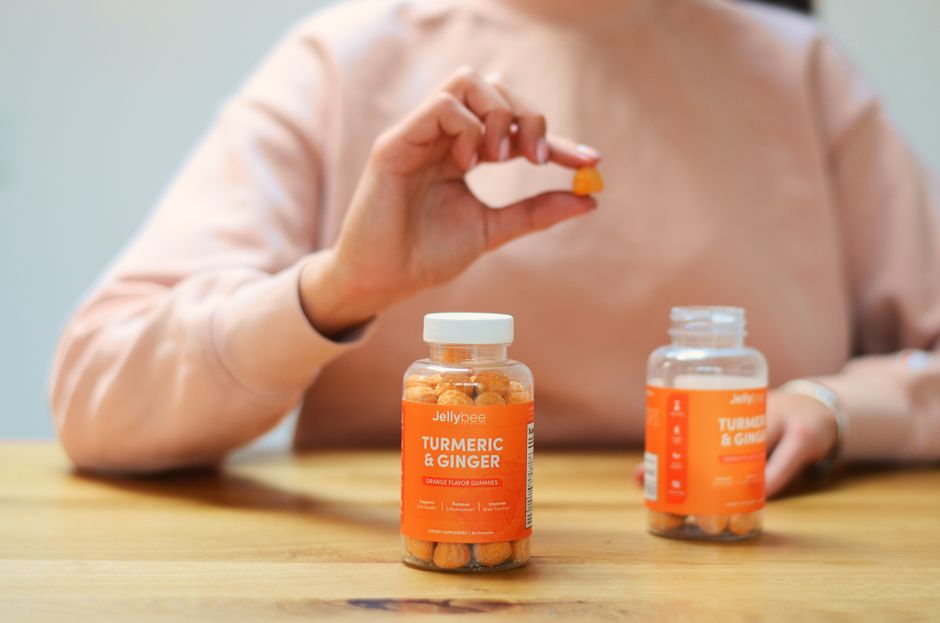
Start with a private-label gummy when speed, lower development exposure, and a proven stock formula matter most. Develop a custom gummy when the formula itself is the product and the business can absorb larger minimums, longer validation, and formulation constraints. Compare orders by gummies and bottle count, demand batch-level testing records, and settle feasibility before approving labels or packaging.
Should I start with a private-label gummy or develop a custom formula?
Start private label when the stock formula meets the product brief. Go custom when a stock formula cannot carry the active ingredients, format, taste, or positioning the product requires.
The split is not cosmetic. A stock gummy is an existing production system: its gel base, flavor, serving format, and manufacturing path already exist. Your Gummy Vitamins lists a stock private-label minimum of 150,000 gummies, or 2,500 bottles at 60 gummies per bottle, on its undated published FAQ. Its custom minimum is 500,000 to 1 million gummies, or about 8,333 to 16,666 60-count bottles, depending on formula complexity, on that same undated FAQ.
Custom work earns its cost when differentiation survives contact with the factory. The 2024 Foods review says gummy development depends on the gelling agent, pH adjustment, texture, flavor, and shelf life. Adding an active ingredient changes a system, not a line on a label.
Gelatin and pectin are not interchangeable names. The 2024 review identifies pectin, gums, and starches as alternatives for vegan and vegetarian gummies. It also reports that changes from 3% to 6% gelatin and from 0.5% to 1.5% pectin significantly affect texture. A vegan or gelatin-free claim therefore needs a feasibility review, not an assumption.
Private label is a test of demand. Custom formulation is a test of control. Both can be sound choices when the order size, product brief, and launch calendar agree.
| Option | Who it suits | Published cost | Key limitation |
|---|---|---|---|
| Stock private-label gummy | Founders whose brief fits an existing formula | USD 4 to USD 16 per gummy product, according to the undated Your Gummy Vitamins FAQ | Formula choice is limited to stock offerings |
| Custom gummy formula | Founders whose active system, gel base, flavor, or format requires development | USD 5 to USD 30, according to the undated Your Gummy Vitamins FAQ; scope includes listed packaging and testing items but excludes labels, shipping, and marketing | Published minimum of 500,000 to 1 million gummies, according to the undated Your Gummy Vitamins FAQ |
| New gummy product development from Black Label Creations | Founders able to work from a finished-unit quote | GBP 1,400 per SKU development cost and a typical GBP 14,000 to GBP 20,000 order budget excluding VAT, according to Black Label Creations' undated page | MOQ is quoted as 5,600 units for 60-gummy products and 11,200 units for 30-gummy products |
Read a quote like an estimate, not a promise. The same discipline used in construction estimates that protect margin applies here: define what is included, what is excluded, and what changes the price before work begins.
What minimum order quantity should I expect for custom gummy vitamins?
Expect custom gummy minimums to be quoted in gummies, bottles, or finished units, so normalize them before comparing manufacturers.
Your Gummy Vitamins publishes a custom minimum of 500,000 to 1 million gummies, equivalent to about 8,333 to 16,666 60-count bottles, on its undated FAQ. Black Label Creations publishes a different frame: 5,600 units for a 60-gummy product and 11,200 units for a 30-gummy product on its undated gummy page.
Those numbers do not conflict. They describe different commercial offers and different units. The useful comparison is the finished bottle count, gummies per bottle, gummy weight if published, packaging format, and all work bundled into the quote.
Ask the manufacturer to state the minimum in both finished units and total gummies. Ask whether the minimum changes with custom flavors, pectin instead of gelatin, a different bottle, or a more complex active system. Public data does not establish one industry-wide custom MOQ.
How much does it cost to develop and manufacture a gummy supplement?
Published gummy costs span wide ranges because development, packaging, testing, and order size are bundled differently; a comparable quote separates each one.
Your Gummy Vitamins lists USD 4 to USD 16 for stock products and USD 5 to USD 30 for typical custom formulation on its undated FAQ. The page says its custom figure includes bottling, desiccant, closure, heat seal, GMP-compliance testing, tamper band, and label application, while labels, shipping, and marketing are excluded.
Black Label Creations lists GBP 1,400 per SKU for new-product development and a typical GBP 14,000 to GBP 20,000 order budget excluding VAT on its undated page. These are supplier-published commercial figures, not universal market prices. Currency, packaging, formula, minimum order, and included work prevent a direct price ranking.
Use the quote review to expose the hidden edge of the project: sample rounds, formula ownership, stability work, label support, testing scope, freight, and payment terms. If a line is not published or written into the quote, treat it as not published rather than filling the gap with an assumption.
Testing is part of the product. Under 21 CFR 111.70, a U.S. dietary-supplement manufacturer must establish finished-batch specifications for identity, purity, strength, composition, and contamination limits, along with specifications for labels and contact packaging. That rule gives a quote-review checklist its spine.
How long does custom gummy vitamin formulation and production take?
Custom gummy timelines are measured in months, while stock orders can move in weeks, according to the manufacturer timelines in the supplied research.
Your Gummy Vitamins lists 4 to 6 weeks for stock-formula orders and estimates 6 to 12 months for custom formulas on its undated FAQ. Black Label Creations estimates 10 to 14 weeks for development and 12 to 16 weeks for production on its undated page. The gap shows why a custom launch date should follow feasibility, not lead it.
The work before production has a purpose. The 2024 Foods review reports that finished gummies commonly contain 15% to 30% water and that pectin requires attention to pH, texture, flavor, and shelf life. Black Label Creations also identifies active stability, flavor masking, mouthfeel, moisture, oxygen protection, and packaging as constraints.
The 2022 Gels study provides a narrow illustration of that work: its vitamin-D nanoemulsion retained more than 97% of active vitamin D after 15 days, compared with 94.5% for vitamin D in oil solution. The study does not prove performance for another formula. It shows why each active system needs its own stability and sensory evidence.
Before approving a timeline, ask what starts the clock: formula sign-off, raw-material receipt, artwork approval, deposit, or production slot. Ask what event ends development, what sample is approved, and who owns the final formula. A calendar without those gates is only a calendar.
Frequently Asked Questions
Can a manufacturer make vegan, sugar-free, or gelatin-free gummies?
Yes, provided the manufacturer can validate the formula. The 2024 Foods review identifies pectin, gums, and starches as alternatives to gelatin, while Your Gummy Vitamins states that its gelatin-free gummies use fruit pectin and tapioca. The 2022 Gels study also shows that a reduced-sugar gummy remains a full formulation system, using gelatin, xylitol, sorbitol, sucralose, citric acid, and corn oil in its tested formula.
What testing and certifications should a gummy vitamin manufacturer provide?
Ask for ingredient identity verification, supplier qualification records, finished-batch specification results, and certificates of analysis. Under 21 CFR 111.75, manufacturers must verify ingredient identity before use unless FDA grants an exemption, and verify finished-product specifications for every batch or a statistically selected subset. NSF certification adds third-party testing and facility-audit criteria, though a certification claim should be checked against the product and facility in question.
How many active ingredients can realistically fit into one gummy serving?
The supplied research does not establish a universal ingredient count or dose ceiling. The 2024 Foods review shows that gel level, pH, texture, flavor, shelf life, and the active system interact; Black Label Creations also names stability, mouthfeel, flavor masking, moisture, oxygen protection, and packaging as constraints. A feasible serving is therefore established through formulation and stability work, not a fixed ingredient-count rule.
Sources
- Electronic Code of Federal Regulations, 21 CFR 111.70
- Electronic Code of Federal Regulations, 21 CFR 111.75
- NSF Product and Ingredient Certification
- Foods: Current Innovations in the Development of Functional Gummy Candies
- Gels: Nano Matrix Soft Confectionary for Oral Supplementation of Vitamin D: Stability and Sensory Analysis
- Your Gummy Vitamins Manufacturing FAQ
- Black Label Creations Gummy Manufacturing Information
Disclaimer: This article is for general information only and is not medical advice. It is not a substitute for diagnosis or treatment by a qualified healthcare professional. Always speak to your doctor before acting on anything you read here.
You may also like
Can Vitamin D or B12 Supplements Help Knee Pain?
Evidence-led guidance on vitamin D, B12 testing, supplement limits, and when knee pain needs clinical assessment.
What Nutrition Changes May Help With Recurring Nighttime Leg Cramps?
A food-first, evidence-aware guide to recurring nighttime leg cramps, magnesium supplements, hydration, and medical red flags.
What Is the Healthiest Snack to Eat Mid-Morning?
A practical mid-morning snack framework using protein, fiber, portions, and portable food pairings to support fullness without sugary snacks.

How Can I Time Iron, Coffee, Tea, and Calcium to Improve Absorption?
A practical guide to timing iron, coffee, tea, calcium, and vitamin C without unnecessarily restricting foods.