
Should You Book Alaska Cruise Excursions Through the Ship or Independently?
Book through the ship when an excursion is remote, weather-sensitive, capacity-limited, or leaves little time before all-aboard; choose a vetted local operator when the schedule has a large buffer and its cancellation and missed-ship terms are clear. The right choice is not “ship versus local.” It is matching the return risk, weather exposure, and booking rules to that port day.
Is it safe to book Alaska cruise excursions independently?
Yes, independent booking can be safe when you treat the return deadline as the deciding constraint, not the advertised appeal of the tour. Start with the ship’s in-port and all-aboard times, then reject any offered departure that leaves a thin margin for a delay.
Use the return-buffer test: first confirm the operator has your exact ship itinerary; next, select a time the operator itself lists as compatible; then leave room after the published tour end for an unexpected problem. This is practical risk management. It reduces the cognitive load of trying to solve a transport problem while the ship is preparing to sail.
| Decision factor | Book through the cruise line when | Consider an independent operator when |
|---|---|---|
| Return risk | You cannot absorb a late return. | The tour timing leaves a substantial buffer before all-aboard. |
| Weather exposure | A small boat, flight, or remote route could be disrupted. | You have a clear refund policy and a useful backup activity. |
| Capacity | The activity is your priority and a sold-out result would spoil the day. | You have found confirmed availability and acceptable terms. |
| Price | You value included return arrangements more than comparison shopping. | The local price and policies provide better value for your risk level. |
Do not assume every local booking provides ship protection. Alaska Shore Excursions, for example, offers a no-missed-ship guarantee only if the passenger supplies correct itinerary information and books an offered time that is compatible with that itinerary. Its qualifying guarantee covers necessary hotel, food, and transportation costs to meet the ship at the next port if the tour returns late. That is meaningful protection, but it is conditional protection. Read the conditions before treating it as equivalent to a cruise-line booking.
Use this booking script when contacting a local seller: “Our ship is in port from [arrival] to [all-aboard]. Is this departure compatible with that schedule, and what written policy applies if your tour returns late?” A clear answer earns consideration. A vague answer ends the comparison.
Will the ship wait if a cruise-line excursion returns late?
For a significantly delayed cruise-line excursion, Royal Caribbean says it will arrange the guest’s return to the ship at the earliest opportunity at no expense to the guest. That is the core advantage of booking through the line: the cruise line takes responsibility for the return arrangements when its excursion is significantly delayed.
Keep the claim precise. Royal Caribbean’s terms also say excursion providers are independent contractors; the line does not supervise or control them and does not guarantee their performance or safety. Cruise-line booking changes who coordinates a qualifying late return. It does not make weather, mechanical problems, or every operational failure disappear.
“In the unlikely event that your tour is significantly delayed, we will make all the arrangements for you to return to the ship at the earliest opportunity at no expense to you.” — Royal Caribbean Group shore-excursion terms
This is where a ship excursion earns its premium: not necessarily in the tour itself, but in who owns the recovery plan. Book that protection when a delay would have a high practical cost, especially for an excursion that combines distance, weather, and a hard ship deadline.
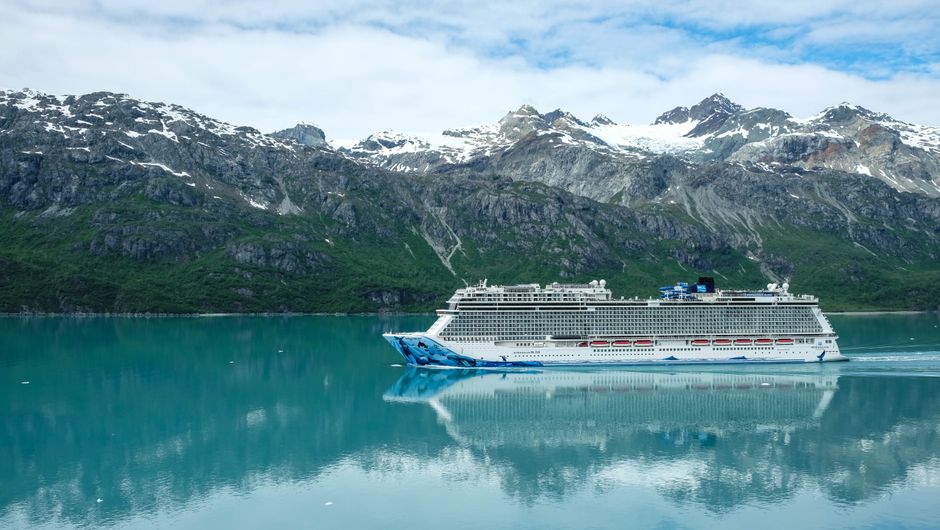
Glacier Bay is the clearest counterexample to “book something in every destination.” The National Park Service says cruise ships do not dock anywhere inside Glacier Bay National Park. That day is not a port call for an independently booked shore excursion. Check the daily ship program instead, because ranger boarding times vary by cruise line, day, and weather.
How much can I save by booking a local Alaska tour instead of the cruise line?
Public information in the supplied sources does not provide a reliable dollar or percentage comparison, so do not choose a local operator based on a promised savings figure. Compare the final booked price and the rules attached to it. The lower headline price is not automatically the lower-cost decision.
Run a terms-first price check. Put the cruise-line option and local option side by side, then compare cancellation deadline, weather refund, timing compatibility, and late-return coverage before comparing the amounts. If the cheaper option has a restrictive refund policy or forces a tight return schedule, the saving may not compensate for the added exposure.
Royal Caribbean says excursion prices can change until the ticket is purchased and that activities can be canceled or modified because of participation levels. Its standard cancellation policy allows most excursions to be modified or canceled without penalty up to 48 hours before port arrival, while certain flight, train, special-event, overnight, hotel, and private-journey excursions require cancellation 30 days before sailing. Princess likewise says many excursions have limited participation and are handled first-come, first-served, with waitlisting for sold-out requests.
For independent tours, cancellation rules can be materially different. Alaska Shore Excursions states that a standard cancellation at least seven days before the tour receives a full refund; within seven days, full refunds are limited to specified circumstances, including weather or mechanical cancellation by the operator, documented medical emergency, or a cruise itinerary change. Compare the deadline, not just the price tag. The same discipline used to manage cash flow applies here: protect the commitments that would be expensive to unwind.
Build a port-by-port booking plan
Start with the port, because Alaska is not one uniform excursion environment. In Juneau, whale watching is a practical example of a tour that can fit an independent plan only when the ship’s time ashore supports it. Travel Alaska identifies Juneau as a leading Inside Passage whale-watching location; humpbacks can be seen from April through November, with peak viewing from June through September, and typical tours last three to four hours. Match that duration to the full port window, not merely to arrival time.
In Skagway, reserve early when a capacity-limited experience matters. Travel Alaska reports more than 1 million cruise visitors and more than 400 cruise-ship calls each summer; on the busiest days, up to five ships and more than 8,000 visitors arrive. The White Pass & Yukon Route Railway is identified as the town’s most popular tour, with options from about two hours to full-day trips. For Yukon extensions, White Pass sits at the U.S.-Canada boundary, so verify itinerary length and document requirements before booking.
For Ketchikan and Icy Strait Point, apply the same operating rule rather than pretending the source material establishes a specific best tour: choose a local provider only after its schedule, meeting point, cancellation terms, and return plan are written down. If the information is incomplete, choose the ship excursion or a simpler port-day plan. Uncertainty is not a discount.
Weather needs its own contingency. The National Weather Service says Southeast Alaska can have up to 250 wet days a year, with gale winds possible in any month. June and July have the lowest chance of windy days, but weather-sensitive outings still need a backup. Pack for rain, keep a flexible alternative, and do not schedule a weather-exposed excursion so late that a cancellation leaves no usable day.
Frequently Asked Questions
Which Alaska port excursions should be booked through the ship?
Book through the ship when the outing has little recovery time, depends on small boats or aircraft, travels far from port, or has limited capacity. This is especially useful for a first-choice tour that would be difficult to replace if weather, traffic, or an operator delay disrupts the day. A local option can still work when its scheduled duration leaves a substantial return buffer and its written terms fit your sailing.
How early should I reserve whale watching, glacier, or bear-viewing tours?
Reserve as soon as you have chosen the excursion and confirmed your port schedule, particularly for capacity-limited experiences. Princess says many excursions have limited participation and processes requests in order, while Skagway can receive more than 8,000 visitors on its busiest days. Check both the cruise line's and the local operator's cancellation deadlines before committing.
What happens to an independent excursion if Alaska weather cancels it?
The answer depends on the operator's written policy, so read it before paying. Alaska Shore Excursions says its tours generally run in rain, but it provides a full refund when an operator cancels because of extreme weather or safety concerns. That refund does not automatically replace the lost activity, so keep a lower-risk port-day backup.
Before you book, run one final drill: write down the ship’s all-aboard time, the excursion’s scheduled finish, its cancellation deadline, and the exact sentence that explains a late return or weather cancellation. If one line is missing, do not guess. Choose the option with a complete recovery plan.
Sources
- Royal Caribbean Group Shore Excursions Terms and Conditions
- Princess Cruises Excursion Terms and Conditions
- National Park Service: Glacier Bay Cruise Ship Visitors
- National Weather Service Juneau: Southeast Alaska Touring
- Travel Alaska: Skagway
- Travel Alaska: Alaska Whale Watching
- Alaska Shore Excursions Terms and Conditions