
What Is the Healthiest Snack to Eat Mid-Morning?
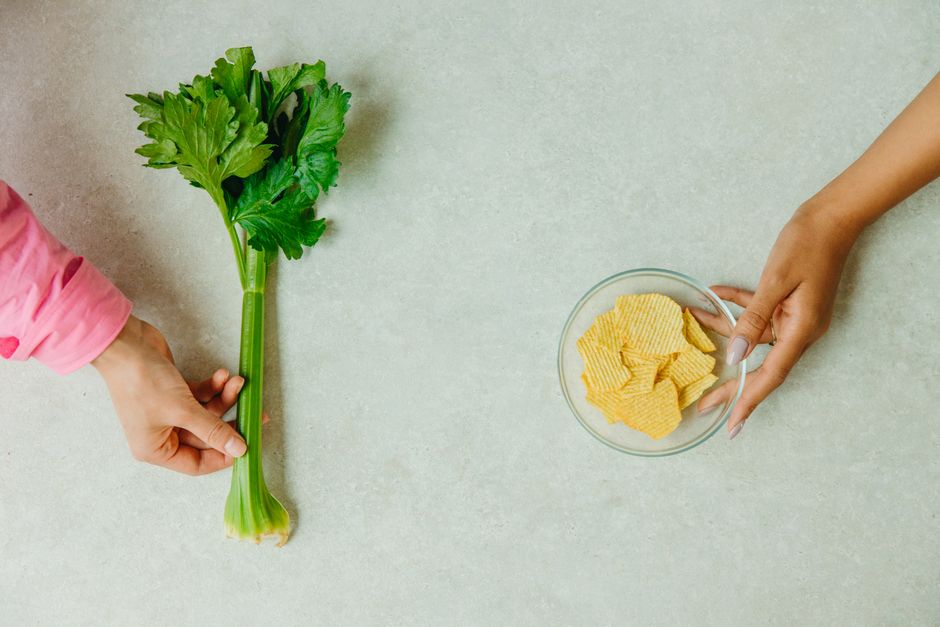
The healthiest mid-morning snack is a portioned pairing of protein or healthy fat with a fiber-rich carbohydrate, such as carrots with hummus, fruit with nuts, or whole-wheat crackers with peanut butter. This framework is portable, reduces reliance on added-sugar snacks, and gives hunger a practical response instead of treating it as a willpower problem.
What is the healthiest snack to eat mid-morning?
The healthiest mid-morning snack is the one that combines staying power with a realistic portion: pair protein or healthy fat with a fiber-rich carbohydrate. That is the Pair-and-Pack rule. Pairing makes the snack more substantial; packing sets the stopping point before a busy morning makes the decision for you.
MedlinePlus Medical Encyclopedia puts the principle plainly: pairing protein with carbohydrate helps a snack keep a person full for longer. Its examples are useful because they are ordinary food, not a specialty-product shopping list: apple with string cheese, whole-wheat crackers with peanut butter, carrots with hummus, and plain yogurt with fruit.
The 2020-2025 Dietary Guidelines for Americans frames the same choice at the food-group level. Fruits, vegetables, whole grains, beans, peas, lentils, unsalted nuts and seeds, and low-fat dairy are nutrient-dense choices when prepared with little or no added sugars, saturated fat, or sodium. The practical move is not to hunt for a perfect snack label. Build from these foods first.
| Situation | Pack this pairing | Why it fits the framework |
|---|---|---|
| No-prep desk option | Whole-wheat crackers with peanut butter | A carbohydrate-and-protein pairing listed by MedlinePlus. |
| Dairy-free option | Carrots with hummus | Vegetables plus a bean-based dip; it is also a MedlinePlus example. |
| Crunchy option | Air-popped popcorn with almonds packed separately | MedlinePlus lists both as portionable snack foods. |
| Sweet-leaning option | Fruit with nuts | The American Diabetes Association lists fruit paired with cheese or nuts. |
Use the table as a menu, not a prescription. The goal is lower cognitive load: choose one pairing, portion it once, and move on.
What should I eat at 10 a.m. if I am hungry before lunch?
At 10 a.m., start by checking whether the signal is hunger, thirst, or a breakfast that did not hold long enough, then choose a planned Pair-and-Pack snack if hunger remains. The American Diabetes Association advises checking for thirst because thirst can be interpreted as hunger; water or a zero-calorie beverage is its suggested first check.
If the pattern shows up repeatedly, breakfast is part of the diagnosis. A randomized crossover trial indexed by PubMed in 2016 compared breakfasts containing protein and fiber with a low-protein cereal breakfast. The higher-protein breakfast and the moderate-protein-plus-fiber breakfast both reduced later meal intake compared with the low-protein, low-fiber breakfast. That does not make a snack unnecessary; it shows why a recurring 10 a.m. problem is worth tracing back to the earlier meal.
Run a simple three-part check for several mornings: first, have a drink; second, note whether breakfast included a protein-and-fiber combination; third, pack a defined snack rather than buying the first sweet item available. This is not a rule to ignore hunger. It is a way to respond with information instead of urgency.
For portable portions, MedlinePlus lists one ounce of almonds, three cups of air-popped popcorn, one cup of carrots, eight ounces of low-fat or nonfat yogurt, and one-half cup of hummus. Those amounts are starting reference portions from MedlinePlus, not universal targets. Appetite, timing, activity, and health needs change what fits.
What snacks keep me full without causing an energy crash?
Snacks most likely to support steadier energy pair protein, healthy fats, or both with fiber-rich foods and avoid making added sugar the main event. The American Diabetes Association notes that complex carbohydrates such as whole grains and legumes digest more slowly than refined carbohydrates and are less likely to cause a rapid blood-glucose spike.
That is why “just something sweet” is a weak plan. A stronger replacement is “fruit with nuts,” “hummus with carrots,” or “nut butter with apple slices,” all combinations named by the American Diabetes Association. The food is familiar. The structure is the upgrade.
For an evidence check, a randomized single-blind crossover study indexed by PubMed in 2006 compared higher-protein, higher-fiber snack bars with high-fat, high-sugar snack bars among 23 women. The higher-protein, higher-fiber bars produced lower nine-hour glucose and insulin responses; after the morning bar, peak glucose was 16% lower than after the comparison bar. The study is narrow, so it does not prove every snack will produce the same response, but it supports the composition-first framework.
The Dietary Guidelines for Americans for 2020-2025 recommend keeping added sugars below 10% of calories per day for people age two and older. Use that as a direction, not as permission to turn snack time into label arithmetic. A food-based pairing is usually easier to repeat than a rule that requires constant calculation.
For blood-sugar-aware eating, the American Diabetes Association also advises regular meal timing and leaving two to three hours between meals so blood glucose can decline toward a desirable level. People managing a medical condition, or whose hunger and energy changes are difficult to explain, need guidance that accounts for their individual health context.
Frequently Asked Questions
Should a mid-morning snack have protein, fiber, or both?
Both is the strongest default because they do different jobs in the framework. MedlinePlus recommends pairing protein with carbohydrate for longer-lasting fullness, while the American Diabetes Association identifies fiber as a fullness-supporting nutrient found in foods such as beans, fruit, vegetables, nuts, seeds, and whole grains. A snack does not need to be complicated: carrots with hummus or apple slices with nut butter covers both sides of the pairing.
What are healthy mid-morning snacks I can take to work?
Portable options from the cited guidance include a portion of almonds, air-popped popcorn, carrots with hummus, whole-wheat crackers with peanut butter, and fruit with nuts. Pack the food in its serving container before work; MedlinePlus specifically advises portioning snacks instead of eating directly from the package. For a dairy-free choice, use carrots and hummus, fruit and nuts, or apple slices with nut butter.
Can a mid-morning snack help prevent overeating at lunch?
It can help manage hunger before lunch, but it is not a guarantee. MedlinePlus states that a healthy snack between meals can decrease hunger and help prevent overeating at mealtime. In a PubMed-indexed randomized crossover study published in 2006, a higher-protein, higher-fiber morning snack bar was associated with 5% lower energy intake at a buffet lunch than the comparison bar.
This week's drill: pack one protein-and-fiber pairing before the next workday, then write down one answer at lunch: did the snack match genuine hunger, or did breakfast need a stronger foundation? Keep the answer practical. That is how a snack becomes a repeatable system.
Sources
- MedlinePlus Medical Encyclopedia: Healthy Snacking
- Dietary Guidelines for Americans, 2020-2025
- PubMed: High protein high fibre snack bars reduce food intake and improve short term glucose and insulin profiles
- PubMed: The effects of the combination of egg and fiber on appetite, glycemic response and food intake
- American Diabetes Association: Meal Planning
- American Diabetes Association: Get to Know Carbs
Disclaimer: This article is for general information only and is not medical advice. It is not a substitute for diagnosis or treatment by a qualified healthcare professional. Always speak to your doctor before acting on anything you read here.