
How Does Biblical Theology Connect a Passage to the Bible's Story?
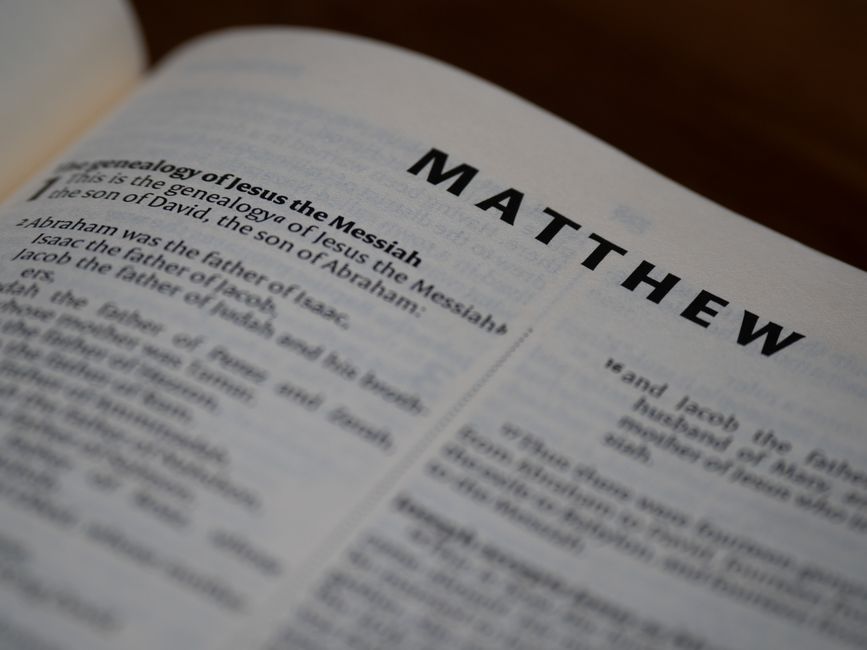
Biblical theology reads a Bible passage first in its own setting, then asks how its words, themes, and purpose connect to the Bible's unfolding story. Systematic theology asks a different, useful question: what does the whole Bible teach about a topic? Start with the passage, not a doctrine you want it to prove.
What is biblical theology in simple terms?
Biblical theology is the practice of understanding each part of Scripture in relation to the whole Bible. It tracks the Bible's own patterns across time: promises, covenants, kings, exile, sacrifice, temple, and the arrival of Christ.
The key move is simple: read close, then read wide. Close means asking what a passage says in its paragraph, book, genre, and historical setting. Wide means asking where its language or theme appears elsewhere and how the passage advances the Bible's larger story.
Themelios, published by The Gospel Coalition, describes biblical theology as understanding the parts of Scripture in relation to the whole while attending to literary, historical, and theological dimensions. That keeps the task practical. You are not hunting for hidden codes. You are following the connections Scripture itself gives you.
Use the Context Ladder when a verse catches your attention:
- Read the whole paragraph before explaining one sentence.
- Read enough of the book to identify its purpose and situation.
- Name the genre: narrative, poetry, or discourse require different reading habits.
- Ask where this theme belongs in the Bible's movement of creation, fall, redemption, and new creation.
- Compare later or earlier passages only when their wording, images, or themes give you a real bridge.
For example, covenant is not merely a label you attach to a verse. Trace what the text says about God's commitments, people, and promises, then compare those observations across Scripture's covenantal stages. Zondervan Academic's guide to biblical context identifies stages involving Adam and Noah, Abraham, Moses and Israel, David, and the new covenant in Christ. That sequence gives your reading a map without replacing the actual text.
How is biblical theology different from systematic theology?
Biblical theology follows the Bible's story and voices; systematic theology gathers what Scripture teaches about a subject. Both disciplines matter. The mistake is treating them as rivals or using one as a shortcut around the other.
| Question | Biblical theology | Systematic theology |
|---|---|---|
| Starting point | A passage, book, theme, or period in Scripture | A doctrine or topic, such as God, salvation, or the church |
| Usual order | Historical and comparative | Topical, logical, and organized by doctrine |
| Main task | Show how the parts relate to the whole story | Construct a coherent account of what the Bible teaches on a topic |
| Common failure | Forcing every text into one pattern | Using isolated verses as proof without their context |
The Gospel Coalition puts the contrast cleanly: “Biblical theology is about connections, while systematic theology is about construction.” Its overview of reading the whole Bible explains that biblical theology follows the canon's voices, while systematic theology organizes teaching around subjects such as God, Christ, salvation, the Spirit, and the church.
Here is the working distinction. If you ask, “How does the kingdom theme develop from Israel's kings to Jesus?” you are doing biblical theology. If you ask, “What does the Bible teach about God's kingdom?” and arrange the answer under doctrinal categories, you are doing systematic theology.
Do not use the weak move: “This verse mentions a word, so it settles my topic.” Use the stronger move: “This verse contributes one part of a theme; now read its paragraph, book, and related texts before drawing the doctrine.” D. A. Carson warns that topical systems can become more vulnerable to simplistic proof-texting when they control the inquiry before close reading does.
How do I find the main point of a Bible passage without taking it out of context?
Find the main point by identifying what the passage is doing in its immediate literary setting before connecting it to a larger theme. Context is not an optional safety check at the end. It is the work.
Run this five-question drill. First: who is speaking or writing, and to whom? Second: what comes immediately before and after? Third: what kind of writing is this? Fourth: what repeated words, contrasts, or images shape the passage? Fifth: how does its message fit the book's purpose and the Bible's storyline?
Zondervan Academic states the rule plainly: “Words mean something in the sentences, paragraphs, chapters, and books in which they are used.” That rule prevents a familiar failure: lifting a line from poetry, prophecy, or narrative and treating it as a free-standing slogan.
Genre changes the question you ask. Narrative shows events and people; it may not directly command imitation. Poetry uses compressed images and parallel lines; read it as poetry, not as a technical definition. Discourse makes arguments; follow the argument's flow before extracting a conclusion. Carson likewise argues that biblical theology must attend to Scripture's varied genres and literary structures, not merely reduce passages to abstract propositions.
Then make the whole-Bible connection with evidence. The Gospel Coalition illustrates this with Jesus's “I am” sayings in John, which echo Isaiah 40-66 and reach back to God's self-identification in Exodus 3:14. The sequence matters: John is not being treated as a detached collection of claims. Its language is being read against earlier Scripture, where that language already carries weight.
End each study with a one-sentence main-point test: “In this passage, the author shows or says ______ so that ______.” If you cannot fill both blanks from the passage and its context, do not jump to a larger theme yet. Go back one rung on the Context Ladder.
Frequently Asked Questions
What does it mean to read the Bible as one unified story?
It means reading individual books and passages as parts of Scripture's larger movement from creation and fall through redemption to new creation. Unity does not flatten the Bible's different authors, genres, and historical settings; it shows how those voices contribute to the whole.
Which biblical themes should a beginner trace across Scripture?
Start with kingdom, covenant, temple, exile, sacrifice, mission, or the love of God. The Gospel Coalition identifies themes including kingdom, covenant, the cross, mission, and God's love, so choose one and trace it slowly rather than trying to follow every theme at once.
Can I study biblical theology without going to seminary?
Yes. Begin with careful reading, use the passage's immediate and literary contexts, and compare related texts without forcing a connection. Keep a simple record of what each passage says before writing conclusions about the larger storyline.
Put this into practice this week: choose one short passage, write its main point in one sentence, name its genre, and list two connections that the text itself supports. Then ask one final question: did the larger story clarify the passage, or did it replace the passage? Keep the first. Redo the second.